
How Much Does Commercial Waterproofing Cost in Florida? (2026 Price Guide)

Commercial waterproofing in Florida typically can vary significantly depending on the system, the building's height, and the condition of the surface. A clear sealer on good masonry sits at the low end; a full vehicular traffic coating on a parking garage or a high-rise elastomeric system sits on the higher end. This guide breaks down real 2026 budgeting ranges by service so property managers and condo boards can plan a reserve or a bid with confidence, and understand what actually moves the number.
A quick word before the numbers: these are planning ranges, not quotes. Every building is different, and the only accurate price comes from a site visit. But if you're building a budget or sanity-checking a proposal, this is where Florida commercial pricing lands right now.
What does commercial waterproofing cost per square foot in Florida?
Here are the ranges we see most often on commercial buildings across Orlando and the rest of Florida in 2026:
Clear water-repellent sealers (silane/siloxane on brick, block, or concrete): $1–$3 per sq ft
Elastomeric wall coatings (waterproof paint systems for stucco, EIFS, and masonry): $2.50–$6 per sq ft of wall area
Caulking and sealant replacement (window perimeters, expansion joints, control joints): $3–$12 per linear foot, depending on joint size and access
Pedestrian deck coatings (balconies, walkways, plaza decks): $5–$9 per sq ft
Vehicular traffic coatings (parking garage decks): $6–$12 per sq ft
Liquid-applied membrane roofing / roof coatings: $4–$9 per sq ft
Below-grade waterproofing and urethane crack injection: highly variable — often $10–$25 per linear foot for injection work
Two things to notice. First, waterproofing is rarely one line item — a real project usually combines caulking, coating, and painting, which is why a single "per square foot" number can be misleading. Second, the material is often the cheap part. On a high-rise, access and prep drive the cost far more than the coating itself.
Why is Florida waterproofing priced the way it is?
Florida is one of the harshest environments in the country for a building envelope. Orlando alone gets more than 50 inches of rain a year, humidity that rarely drops below 70%, daily summer thunderstorms, and UV exposure that breaks down coatings faster than almost anywhere else. Salt air adds another layer of attack in coastal markets like Daytona, Tampa, and Miami.
That environment means two things for cost. Coatings have to be higher-grade to survive, and buildings need to be re-waterproofed more often — most commercial buildings in Florida need attention every 8 to 10 years. Skipping it doesn't save money; it moves the cost from maintenance into structural repair, which is far more expensive.

What drives the price up or down?
The same building can get two very different numbers depending on these factors:
Height and access. Ground-level work with a lift is cheap. A 20-story tower that requires swing stages, rigging, and swing-stage-certified crews costs significantly more per square foot — access can be a third of the job.
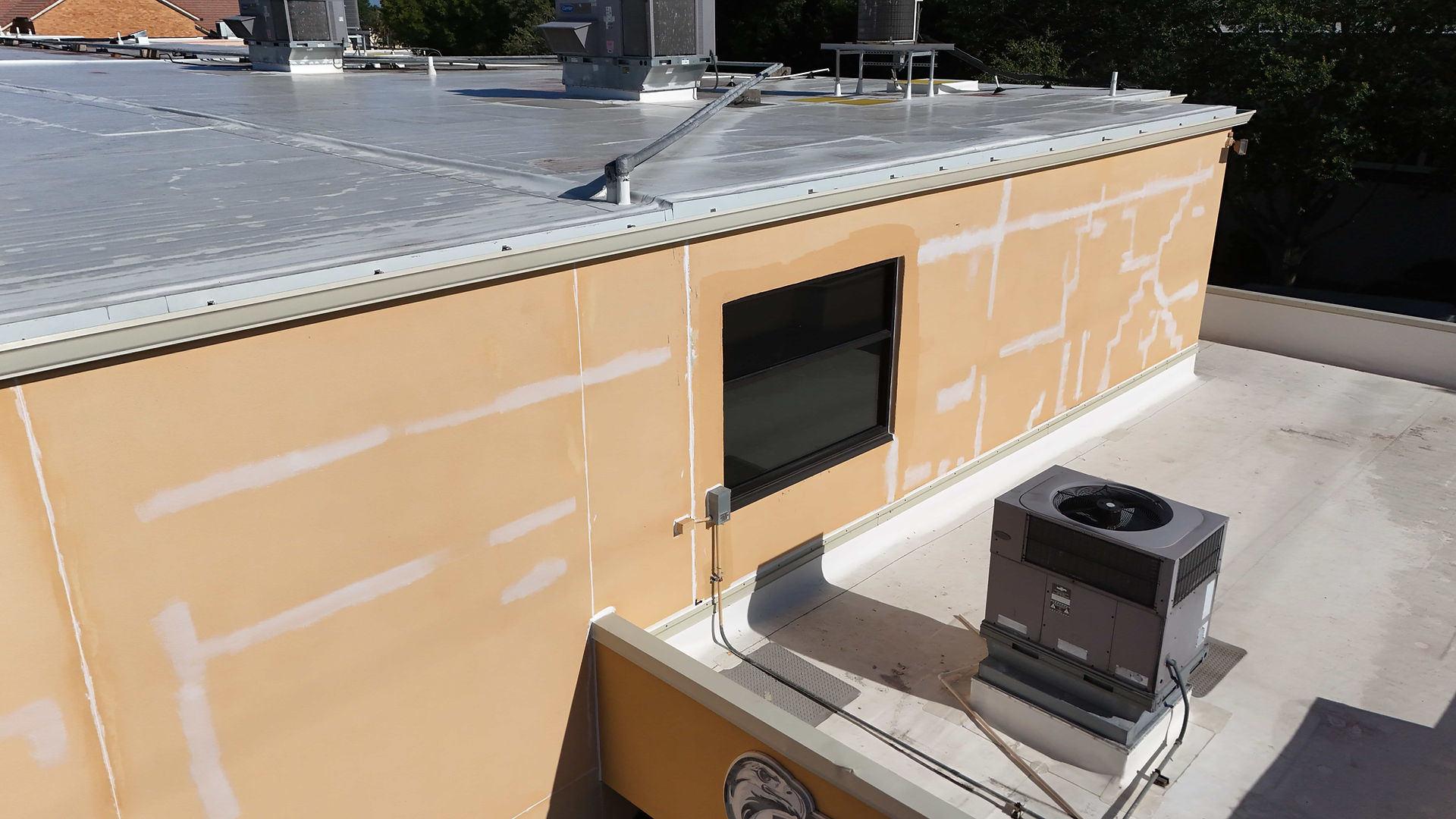
Surface condition. If there's spalling concrete, rusted rebar, cracked stucco, or rotted EIFS, that gets repaired before any waterproofing goes on. Prep and repair are often the biggest variable in a bid.
The coating system. A clear sealer, a single-coat elastomeric, and a full reinforced deck system are three different price tiers. Higher-warranty systems cost more upfront and last longer.
Caulking scope. Failed sealant around windows and joints causes the majority of leaks we investigate. Full sealant replacement adds cost but is usually where the waterproofing dollar works hardest.
Warranty length. A 5-year and a 10-year warranty often mean different systems, more coats, and more prep — and a different price.
Occupancy and phasing. Keeping a condo, hotel, or office fully occupied during the work means night shifts, phasing, and tenant coordination, all of which affect the schedule and the cost.
How often should a Florida commercial building be waterproofed?
Plan on a full exterior waterproofing and coating cycle every 8 to 10 years, with caulking and sealant inspections in between. Parking garage traffic coatings generally need recoating every 5 to 7 years because vehicle tires wear them faster. Roofs vary by system, but a liquid membrane inspected annually can last well past a decade.
For Florida condominium boards, this timing now ties directly to SIRS (Structural Integrity Reserve Study) and milestone inspection requirements. Waterproofing and painting are common reserve line items, and getting ahead of them protects both the building and the budget. The photos below reference common signs that your building needs to be waterproofed.


How to budget without overpaying
The cheapest bid is rarely the cheapest project. A low number often skips prep, uses a lighter system, or carries a shorter warranty — and you pay the difference in three to five years. When you compare proposals, look past the total and check three things: the named coating system and its warranty (Dow, Sika, NeoGard, and Benjamin Moore products are what we spec), the scope of caulking and sealant replacement, and how surface repairs are handled. A proposal that spells out materials, coats, and prep is almost always a better value than one that just gives a lump sum.
At Structural Waterproofing Company, we've been protecting Florida commercial buildings since 1975 — high-rise condominiums, parking garages, hotels, churches, and office buildings across Orlando and the entire state. If you want a real number for your building instead of a range, we'll come look at it for free.
Frequently asked questions
How much does commercial waterproofing cost per square foot in Florida?
Most commercial waterproofing in Florida costs $2 to $12 per square foot in 2026. Clear masonry sealers run $1–$3, elastomeric wall coatings $2.50–$6, pedestrian deck coatings $5–$9, and parking garage traffic coatings $6–$12. Height, access, and surface condition move the number more than the coating itself.
Why is commercial waterproofing more expensive on high-rise buildings?
Access. A high-rise requires swing stages, rigging, and swing-stage-certified crews, which can account for a third of the total cost. The coating on a 20-story tower isn't much different from a 3-story building — getting crews safely to the surface is what adds the cost.
How often does a Florida commercial building need to be waterproofed?
Every 8 to 10 years for a full exterior coating cycle, with caulking inspections in between. Parking garage traffic coatings typically need recoating every 5 to 7 years due to tire wear.
Does waterproofing include caulking and painting?
Usually, yes. On most commercial projects, waterproofing, caulking and sealant replacement, and elastomeric painting are done together as one system, because a coating is only as good as the sealed joints and prepared surface underneath it.
What's the most expensive part of a waterproofing project?
Usually access and surface repair, not the coating. Spalling concrete, rusted rebar, and failed stucco or EIFS all get repaired before waterproofing begins, and that prep is the biggest variable in most bids.
Ready to protect your building? Talk to Structural Waterproofing Company — Florida's commercial waterproofing, painting, and caulking specialists since 1975. Call our Maitland office at (407) 645-2021, email alex@swpfl.com, or request a free site visit on our contact page. We'll come out, look at your building, and give you a real number instead of a range.


Comments