
SIRS Flagged Waterproofing? A Florida Condo Board's Guide to What Comes Next

If your condo association's Structural Integrity Reserve Study (SIRS) just flagged waterproofing or exterior painting, the short version is this: Florida law now requires every condo and co-op building three stories or taller to assess and fund reserves for these components, and you can no longer vote to waive the reserve. What happens next depends on the remaining useful life the engineer assigned and what your building actually needs.
This guide walks Florida property managers, condo board members, and association presidents through what a SIRS waterproofing finding actually means, what it typically costs to fix on a Central Florida condominium, and how to plan the work over a reasonable reserve cycle. It's written from the contractor's side of the table. Structural Waterproofing Company has been doing this work in Florida since 1975, including projects at Star Tower Condominiums in Orlando, the Moorings at Lake Maitland, and dozens of other multi-family high-rises across the state.
What does Florida's SB-4D law actually require for waterproofing?
Florida's Senate Bill 4-D, passed in May 2022 in response to the Champlain Towers South collapse in Surfside, created two new obligations for condominium and cooperative buildings three stories or taller in Florida.
First, a Milestone Structural Inspection by a licensed engineer or architect at 30 years from the certificate of occupancy (25 years for buildings within three miles of the coast), then every 10 years after.
Second, a Structural Integrity Reserve Study (SIRS) that assesses nine major structural components and calculates the funding needed to maintain them. The nine components include the roof, load-bearing walls, floor, foundation, fireproofing, plumbing, electrical, windows and exterior doors, and — bundled together as one category — waterproofing and exterior painting.
The most consequential change for boards took effect January 1, 2025: associations can no longer hold unit-owner votes to waive or reduce the reserve contribution for any of the nine SIRS components. The reserve has to be funded based on the engineer's estimate of remaining useful life and replacement cost.
Why are waterproofing and exterior painting bundled in the same category?
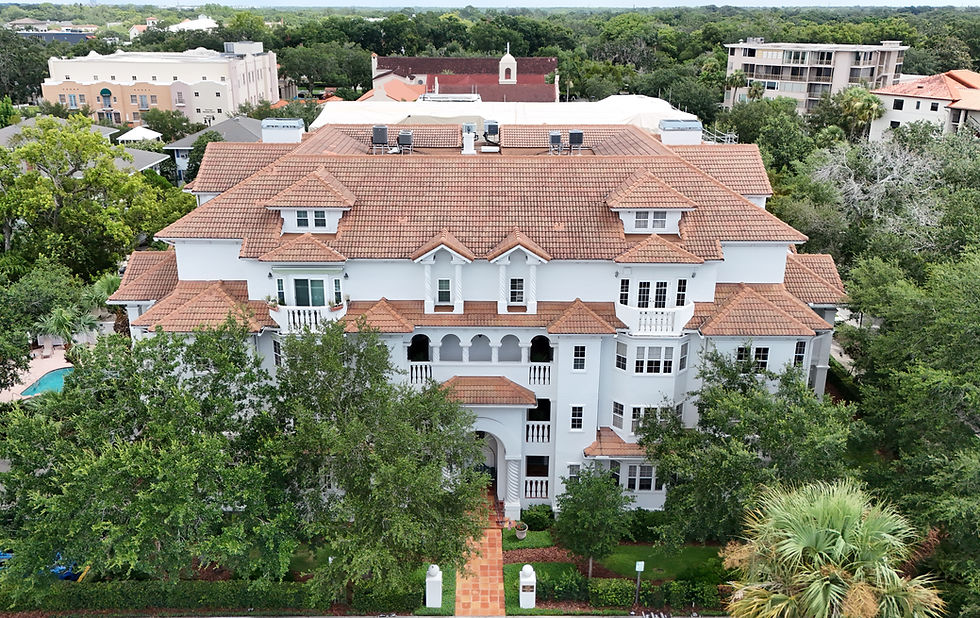
This trips up almost every first-time SIRS reader. The law groups waterproofing and exterior painting together because, on most Florida commercial buildings, they're really one continuous protective system. The exterior elastomeric coating, the caulk joints around windows and expansion joints, the sealants at penetrations, and the membrane under any plaza deck or balcony all work together to keep water out of the structure. A failure in any one of them lets water reach the rebar, and from there everything downstream — concrete spalling, stucco delamination, interior leaks, mold — gets more expensive fast.
That's why a competent commercial waterproofing contractor never bids a re-coating job in isolation. The full envelope cycle on a Florida condo is typically: pressure wash the exterior, repair stucco and EIFS cracks, remove and replace failed sealants at every joint and penetration, prime, and re-coat the entire elevation with a high-build elastomeric system. The painting and the waterproofing aren't separate scopes — they're the same project.
What does a remaining useful life finding on waterproofing actually mean?
Your engineer's SIRS report assigns every component an estimated remaining useful life and a replacement cost. For the waterproofing and exterior painting category on a Central Florida high-rise or mid-rise, those numbers are usually built off a few assumptions:
Most quality elastomeric exterior coatings carry a manufacturer warranty of 7 to 10 years and last 8 to 12 years in service before recoating becomes necessary. Coastal buildings exposed to salt air run on the shorter end.
Sealants and caulking deteriorate faster than the field coating. Most urethane sealants are spec'd for 15 to 20 years but in Florida sun and humidity start failing visibly around year 8 to 10 at every joint that sees direct UV.
Plaza decks, parking garage decks, and balcony deck systems with traffic-bearing membranes typically need recoating every 7 to 12 years depending on traffic and exposure.
If the engineer assigned a remaining useful life of zero or one to two years on waterproofing, the recommendation is to start scoping and bidding now — not to wait for the next inspection cycle.
What does a full re-waterproofing and exterior paint cycle cost in Florida?
Cost varies enormously by building, but here are the ranges Florida property managers should plan for as of 2026, on a per-square-foot of exterior wall basis:
Pressure wash and inspection: $0.20 to $0.50 per square foot
Stucco and EIFS crack repair, typical scope: $0.40 to $1.50 per square foot, higher with significant spalling
Joint sealant removal and replacement: roughly $4 to $9 per linear foot of joint
Two-coat elastomeric exterior coating system: $2.50 to $5.50 per square foot installed
Wet-sealing at window perimeters: $5 to $12 per linear foot
A typical mid-rise condo in Orlando, Maitland, or Winter Park with 60,000 square feet of exterior wall might budget $250,000 to $500,000 for a full envelope cycle, not counting balcony deck coatings or parking garage work, which are scoped separately.
For parking garage waterproofing — a separate SIRS category on the structural component side, but often packaged together for procurement — traffic-bearing polyurethane membrane systems run $6 to $12 per square foot of deck. A 50,000-square-foot garage typically runs $300,000 to $600,000 for a full traffic-bearing rebuild.
These numbers are starting points for reserve planning, not estimates. Any contractor giving a hard number without doing a site visit isn't giving you a real number.
How should the board plan and budget the work?
Once your SIRS report is in hand, the practical path forward for the board usually looks like this:
Within 60 days: Walk the building with two or three commercial waterproofing contractors and request scoped proposals. A real proposal should reference the SIRS findings, identify which elevations need work most urgently, and break out painting, caulking, stucco repair, and any deck work as separate line items.
Within 90 days: Adjust the annual reserve contribution based on the actual scoped numbers, not the engineer's planning estimate. The contractor's price will often differ from the SIRS number, sometimes meaningfully, because the engineer can't physically inspect every elevation in detail.
Within the next budget cycle: Schedule the work for an off-peak window. In Central Florida that usually means starting between November and March to avoid the heaviest summer rains, except for buildings where summer is the only option because of guest occupancy or HOA logistics.
Plan in phases for larger buildings: A 200-unit high-rise rarely re-waterproofs the entire envelope in one season. Phasing by elevation lets the association manage cash flow and resident disruption.

How to choose a contractor for SB-4D compliance work
Five things separate a contractor who can stand behind SIRS-driven work from one who can't:
A current Florida commercial contractor's license (CCC for waterproofing) and proof of insurance with limits high enough for a multi-family project. Structural Waterproofing Company holds Florida CCC #033712.
Documented experience on multi-family or commercial high-rise envelope projects in Florida. References should include building names, square footage, and the year the work was completed.
Manufacturer-certified application status with the coating system being installed. Most quality elastomeric and traffic-bearing systems require certified applicators to honor the warranty.
A written warranty that names both the contractor and the manufacturer, with clear coverage on labor and materials.
A scope of work that reflects what the SIRS report actually identified, not a one-size-fits-all bid. If the engineer flagged failed sealants on the east elevation and the proposal doesn't mention them, that contractor isn't reading your documents.
Frequently Asked Questions
Does every Florida condo need a SIRS?
Condo and co-op buildings three stories or taller. Single-family, two-family, and three-family residential buildings are excepted, even if three stories.
Can the board still vote to waive waterproofing reserves?
No. As of January 1, 2025, reserves for any of the nine SIRS structural components, including waterproofing and exterior painting, cannot be waived by unit owner vote.
What happens if the work isn't done within the useful life estimate?
The reserve study has to be updated every 10 years. If the engineer's next inspection finds the same waterproofing scope deteriorating, useful life will drop and the required annual contribution will rise. Boards that defer the work usually end up with both a larger special assessment and a more expensive scope because deferred maintenance adds concrete repair to the project.
Does a SIRS waterproofing finding automatically require an immediate project?
No. It requires reserves to be funded. The timing of the actual work is the board's call, guided by the engineer's remaining useful life estimate and a current contractor walk-through.
Are balcony coatings part of the waterproofing reserve?
On most Florida high-rise condominiums, yes. Balcony deck coatings, balcony railings tied to the structure, and the sealant at the slab-to-stucco transition all roll up into the waterproofing and exterior painting category in practice.
How long does a typical re-waterproofing project take?
A 100-unit mid-rise might take 12 to 20 weeks for a single full envelope cycle. Phased projects on larger high-rises can stretch over multiple seasons.
Who is responsible if the contractor's work fails before the warranty expires?
Both the contractor and the coating manufacturer, if it's a certified-applicator installation. This is one of the most important reasons to insist on manufacturer-certified status before signing a contract.
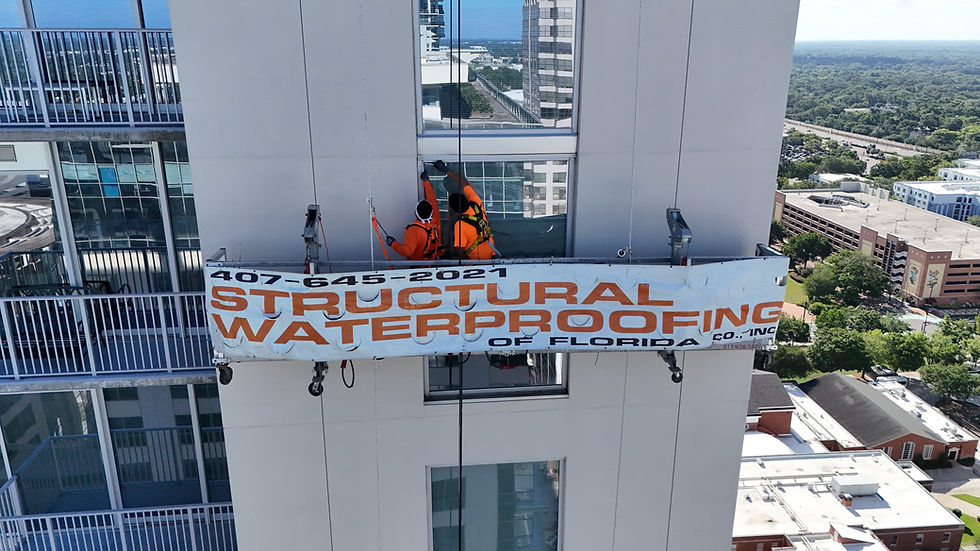
If your association's SIRS report just flagged the waterproofing and exterior painting line, Structural Waterproofing Company offers no-cost site visits across the entire state of Florida. We'll walk the building with you, review the engineer's findings, and give you a scoped, line-itemed proposal you can take back to the board. Call (407) 645-2021 or use the contact form https://www.swpfl.com/contact-us


Comments