
Hurricane Season Waterproofing Prep for Florida Commercial Buildings
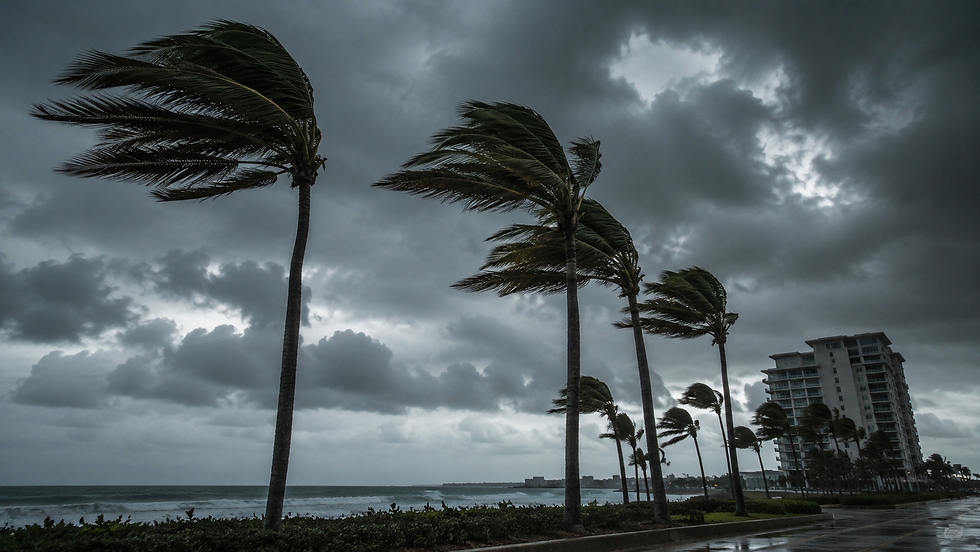
Hurricane season in Florida runs June 1 through November 30, and the best moment to harden your commercial building is right now, right before the first named storm forms. Most of the water damage that shows up after a hurricane wasn't caused by the wind. It came from existing weaknesses in the building envelope that the storm exploited. A failed caulk joint, a hairline crack in stucco, a tired roof penetration, all of which are dramatic problems on a normal Tuesday, but every one of them is a path for hurricane-driven rain to get into the structure.
This is the pre-storm checklist Structural Waterproofing Company gives the Orlando-area property managers and condo boards we work with every spring. We've been doing commercial waterproofing in Florida since 1975 and have walked thousands of buildings before and after hurricane impacts. The pattern is consistent: prepared buildings come through fine, deferred-maintenance buildings don't.
When should Florida commercial buildings be inspected for hurricane prep?
Two windows matter. The first is March through early May, when there's still enough lead time to scope, contract, and execute waterproofing work. The second is immediately after any named storm event, even if the building looks fine from the curb, a quick post-storm inspection catches problems before the next system rolls in.
For buildings on a fixed maintenance cycle, the right rhythm is an annual pre-season walk-down every March or April plus a quick post-storm look any time the eye of a named system passes within 100 miles.
The pre-storm exterior walk: what to look for
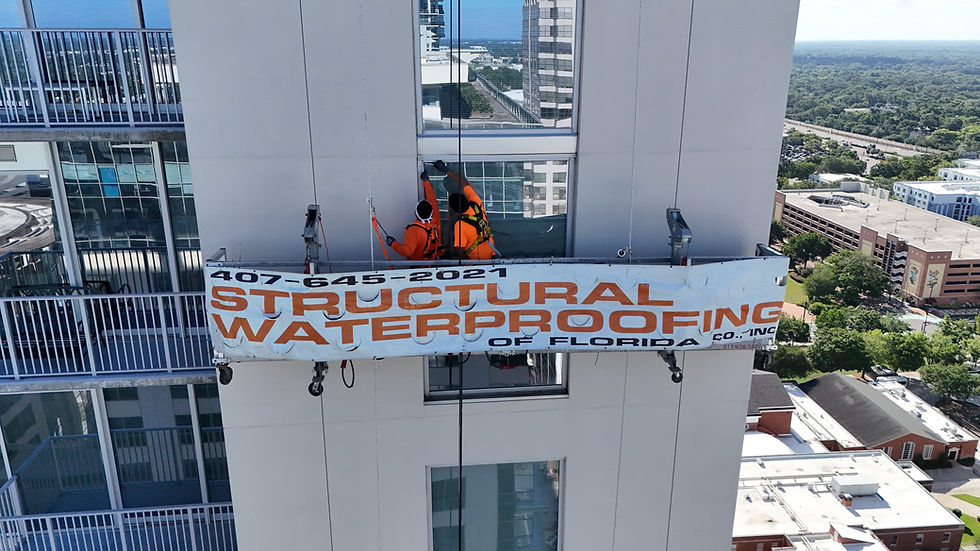
You can do most of this from the ground with a good pair of binoculars or a phone with optical zoom. For high-rise buildings, a drone pass or a swing-stage inspection is worth scheduling once a year. Here's what to look for, in roughly the order you'd walk a building.
Caulk and sealant joints
This is where Florida buildings fail first, every time. UV breaks down most polyurethane sealants visibly by year 8 to 10, and a brittle or separated caulk joint is a direct path for wind-driven rain to enter the wall cavity. Walk the building and look at every joint that takes direct sun — south and west elevations are usually the worst. The specific things to check:
Window Perimeter Caulk or Wet-seal: look for chalking, cracking, or any joint that's pulled away from the substrate
Expansion Joints: These often run vertically up the building corners and across long elevations; failures here let water sheet down inside the wall, which can damage the structural integrity of the building or damage the coating/paint.
Penetrations: pipe sleeves, conduit boots, light fixtures, signage anchors, or hose bibss, all of which is a potential leak path.
Control joints in stucco and CMU
If any joint looks hardened, cracked, separated, or completely missing, it should be on your repair list. Waterproofing a building and addressing these problems is a relatively low-cost compared to the cost of repairing your building after the damage has been done.
Stucco, EIFS, and exterior walls
Walk the perimeter and look for:
Hairline cracks in stucco: Most are just cosmetic at first, but step-cracks running diagonally across CMU wall surfaces may be a structural signal and should be possibly evaluated by an engineer.
Efflorescence: The white powdery residue that shows up on walls, meaning water is migrating through the wall and depositing salts. This is common amongst older buildings where a coating job is overdue.
Bulging, soft spots, or hollow sounds when tapped on EIFS or DryVit surfaces: These mean moisture has gotten behind the system and the substrate is delaminating.
Rust streaks bleeding through stucco or paint: That's the rebar talking, and the conversation isn't going to get better on its own.
A hairline crack that gets sealed and coated before hurricane season will be protected. The same crack hit by 80 mph horizontal rain becomes a leak path, and can lead to very expensive repairs.
Exterior paint and elastomeric coatings
The paint on a Florida commercial building is doing a lot more than making it look good. A properly applied elastomeric coating bridges hairline cracks, sheds wind-driven rain, and stretches with the building's thermal movement. Signs the coating system is past its service life:
Visible chalking when you rub a clean hand across the surface
Fading or color shift, particularly on south and west elevations
Peeling, flaking, or blisters
Bare substrate showing through anywhere on the building
If the building hasn't been re-coated in 8 to 10 years, the coating is probably at or past end-of-life regardless of how it looks at a glance. Plan the re-coat for the next maintenance cycle, even if a full elastomeric recoat isn't going to happen before this hurricane season.
Roof and roof penetrations
Roofs are where most post-storm leak calls originate. The pre-season checklist:
Walk the roof or have a roofer do it. Look at every penetration: HVAC curbs, vent pipes, drain bowls, equipment screens, antennas, satellite mounts
Inspect flashings at parapet walls, transitions, and roof-to-wall details. Failed counterflashing is the single most common roof-edge leak source
Check drains and scuppers. Clear them, photograph them, and make sure water can actually move when the storm hits
For single-ply and modified bitumen roofs, look for blistering, fishmouths in the seams, or punctures
For liquid membrane systems, check for adhesion failure, especially at penetrations and parapet transitions
Anything that looks marginal should be re-flashed or recoated now, not after the first storm rinses it off.
Parking garage and deck waterproofing
Parking garage decks take an unusual beating in Florida, usually from constant UV, traffic, and salt air all working at once. Pre-storm checks:
Inspect the deck surface for cracking, delamination, or wear-through of the topcoat
Walk expansion joints across the deck — these are the highest-risk failure points in any garage and the first thing to leak in heavy rain
Check drains and scuppers; pooled water on a deck means the slope is wrong, the drain is clogged, or both
Underneath the deck, look for efflorescence, staining, or rust spots dropping from the slab above — those mean water is already getting through and the membrane needs attention
A failed traffic-bearing membrane during a tropical system can soak the entire level below in a single afternoon.
Window perimeters and storefront systems
Aluminum storefront systems and curtain wall transitions are favorite hurricane leak paths. Specifically look for:
Failed wet-seal around storefront mullions and head/sill transitions
Cracked or separated caulk at the storefront-to-stucco interface
Any gasket that looks dried out, twisted, or pulled away from the frame
Wet-sealing window and storefront perimeters is one of the highest-leverage pre-season interventions available. It's relatively fast to execute and prevents the leak path most likely to result in interior damage and tenant complaints during a storm.

After the storm: what to document and when to call
If a named storm passes within range, walk-down your building within 72 hours. Walk the entire envelope, photograph every new defect, and note any new interior water staining unit-by-unit. The documentation matters for insurance, for the SIRS file, and for prioritizing the next round of repairs.
When to call a commercial waterproofing contractor:
Any new active leak into a tenant or unit-owner space
Visible new cracks in stucco, especially diagonal or step-pattern
Deck membrane damage on any parking or plaza deck
Failed window perimeter sealant pulling away from substrate
Roof flashing visibly damaged or displaced
The window between the immediate post-storm cleanup and the next system is the right time to scope and execute repair work. Florida property managers who treat the season as a continuous prep-and-repair cycle, not a one-time spring event, have meaningfully lower year-over-year repair costs.
Why this work matters more in Florida than anywhere else
Florida buildings live through more wind-driven rain per square mile than commercial buildings almost anywhere in the country. Orlando alone averages more than 50 inches of rain annually, with afternoon thunderstorms most summer days and major tropical systems on a multi-year cycle. Add humidity that rarely drops below 70%, UV intensity that ages every coating faster, and salt air on coastal elevations, and the picture is clear: the building envelope on a Florida commercial property is doing harder work than its counterparts in any other state.
The buildings that hold up are the ones where someone — usually the property manager — treats the envelope as a maintainable system, not a static finish.

Frequently Asked Questions
When does hurricane season officially start in Florida?
June 1 through November 30, with peak activity from mid-August through October.
How early should a commercial building be inspected for hurricane prep?
Ideally March or April, leaving four to eight weeks to scope and execute work.
What's the single highest-payoff pre-season intervention?
Wet-sealing failed caulk joints around windows, expansion joints, and penetrations. It's relatively fast, relatively low-cost, and addresses the leak path that causes the most post-storm tenant calls.
Does exterior paint actually protect a building during a hurricane?
Yes, when it's a properly applied elastomeric system within its service life. A 10-mil-plus elastomeric coating bridges hairline cracks, sheds wind-driven rain, and stays flexible through the building's thermal movement. Standard latex paint at 2 to 3 mils doesn't do any of that.
How often should a Florida commercial building be re-coated and re-caulked?
Most exterior elastomeric coatings carry 7-to-10-year warranties and last 8 to 12 years in service. Sealants typically run 8 to 15 years depending on exposure. Most well-maintained buildings end up on an 8-to-10-year full envelope cycle.
What about parking garages — same cycle?
No. Traffic-bearing membrane systems on parking decks typically need recoating every 7 to 12 years, and the topcoat alone is usually due around year 5 to 7.
Should I get a drone inspection?
For any building three stories or taller, an annual drone pass picks up high-elevation defects that you can't see from the ground. Structural Waterproofing Company, LLC is specialized in these inspections and can fly the building as part of a pre-season inspection.
If your Florida commercial building hasn't had a pre-season walk-down yet, there's still time. It is always encouraged to preemptively protect your building in a organized cycle.
In Florida, it's not a question of "if" severe weather will occur, but rather "when" it will happen.
Call Structural Waterproofing Company at (407) 645-2021, email us at alex@swpfl.com or request an inspection through the contact form on https://www.swpfl.com/contact-us. We work across Orlando, Maitland, Winter Park, and all of Florida.


Comments